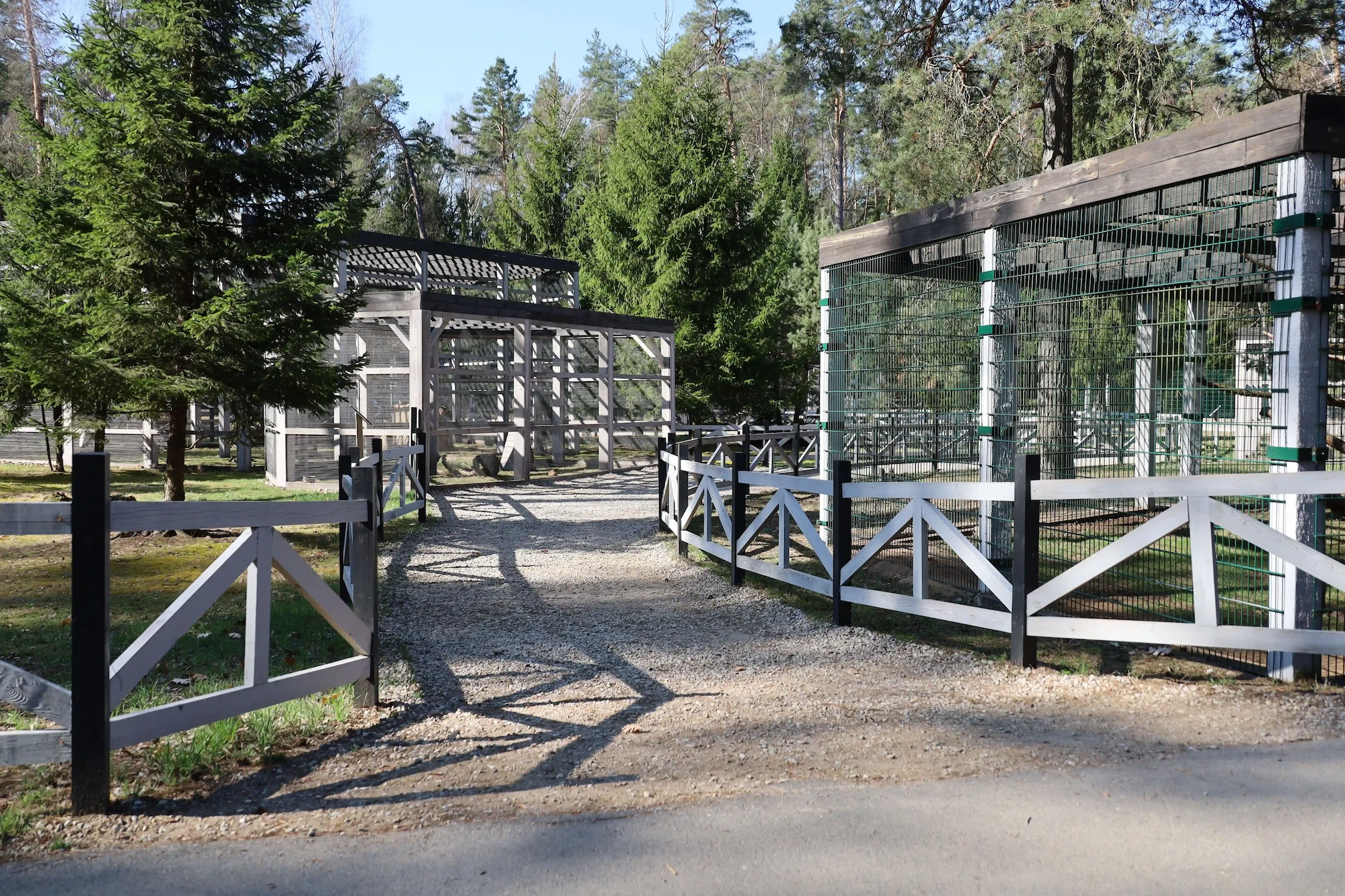
Walking route «Lake Ring»
Belovezhskaya Pushcha National Park
«Lake Ring» route is a unique tourist route, 5.8 km long. It passes through what was once a partially developed «park and management section» of the Belovezhskaya Pushcha State Nature Reserve (now a recreation park). The project was launched in 1965.
Since 2016, the site has been dammed to restore the hydrological regime. The dammed system of canals and reservoirs attracts a variety of native animals.
Today, the area is popular with visitors to the national park who prefer a quiet retreat on the lake shores.
1. Centuries-old pine forest (52.573131, 23.790539)
Pine-dominated forests occupy 63% of the forested area of the forested area. Before us is a magnificent example of an old pine forest. The average age of its trees is approximately two centuries. Few protected areas boast such magnificent stands. Many of these striking pines grew on the sites of a fire that raged in 1811, on the eve of Napoleon’s invasion. Today, these forested areas represent invaluable monuments to the power of living nature, having been reborn without any human intervention.
2.Lake Plyanta 1 (52.575458, 23.782149)
The lake is 1–3 meters deep. In some places, springs bubble up from the bottom. The bottom is strewn with numerous pearl mussels, and schools of fry can be seen in the water. The lake’s main fish species include carp, pike, perch, crucian carp, roach, and tench. Otters and mink come to Plyanta 1 to feast on the fish.
Swans and ducks can be seen on the lake’s surface early in the morning. Closer to the shore, broad leaves of the water lily float, creating favorable shade for aquatic life and a resting place for nimble dragonflies and other insects.
Canadian waterweed, pondweed, hornwort and mulberry grow in the shallows. The most common coastal grasses include sedges, rushes, marsh marigold, and water marigold.
Crayfish inhabit the clear waters of the lake.
3.Lake Plyanta 2 (52.574807, 23.778044)
The lake is located in a formerly swampy area of the forest. Its depth is 1-2 meters.
The lake’s high shore is a sand dune covered with pine forest. The remaining sides of the lake are lined with alder and birch trees, interspersed with conifers, giving it a picturesque appearance, a sense of mystery and solitude.
Deer, foxes, mink, ducks, and beavers can be seen near and around the lake early in the morning.
Occasionally, a wolf is captured on camera traps here. Its presence is indicated by graveyards at road intersections. This is how it marks its territory, demonstrating the significance of this place to it.
4.Giant juniper (52.573993, 23.771844)
Juniper typically appears as a dense, evergreen, thorny bush or small tree. It is quite important in forests and provides shelter for many animals. It grows slowly, with an annual growth rate of about 10 cm. In this case, the tree is over 200 years old and stands approximately 15 meters tall.
Although juniper is a fairly typical species in Belovezhskaya Pushcha, it is rare to see it as a tree, as are dense juniper thickets.
Juniper is known for its ability to purify the air of bacteria. Juniper berries are believed to reduce swelling and inflammation, and a juniper sprig in a bath whisk has a therapeutic effect similar to acupuncture.
5.Spruce (52.576622, 23.773203)
Forests dominated by Norway spruce occupy more than 4% of the forested area in Belovezhskaya Pushcha. Spruce is common in various stands. It is highly shade-tolerant, but due to its shallow root system, it often suffers from windfalls and fluctuating groundwater levels. It reaches a height of 35-50 m. Individual trees live up to 300-350 years. The needles remain green for 7-9 years.
6.Lake Plyanta 3 (52.578224, 23.773947)
This lake, 1-1.5 meters deep, it is hidden in the dense forest. Its seclusion in the damp alder forest lends it a magical mystique and the primordial feel of an open swamp.
The area adjoins a river floodplain and is crisscrossed by the migration routes of deer and wild boar.
The lake is also of interest because it serves as a food source and habitat for amphibians, beavers, ducks and herons.
Phone: +375 33 399-19-22
E-mail: admin@npbp.by
Services and amenities
 Gazebos
Shop
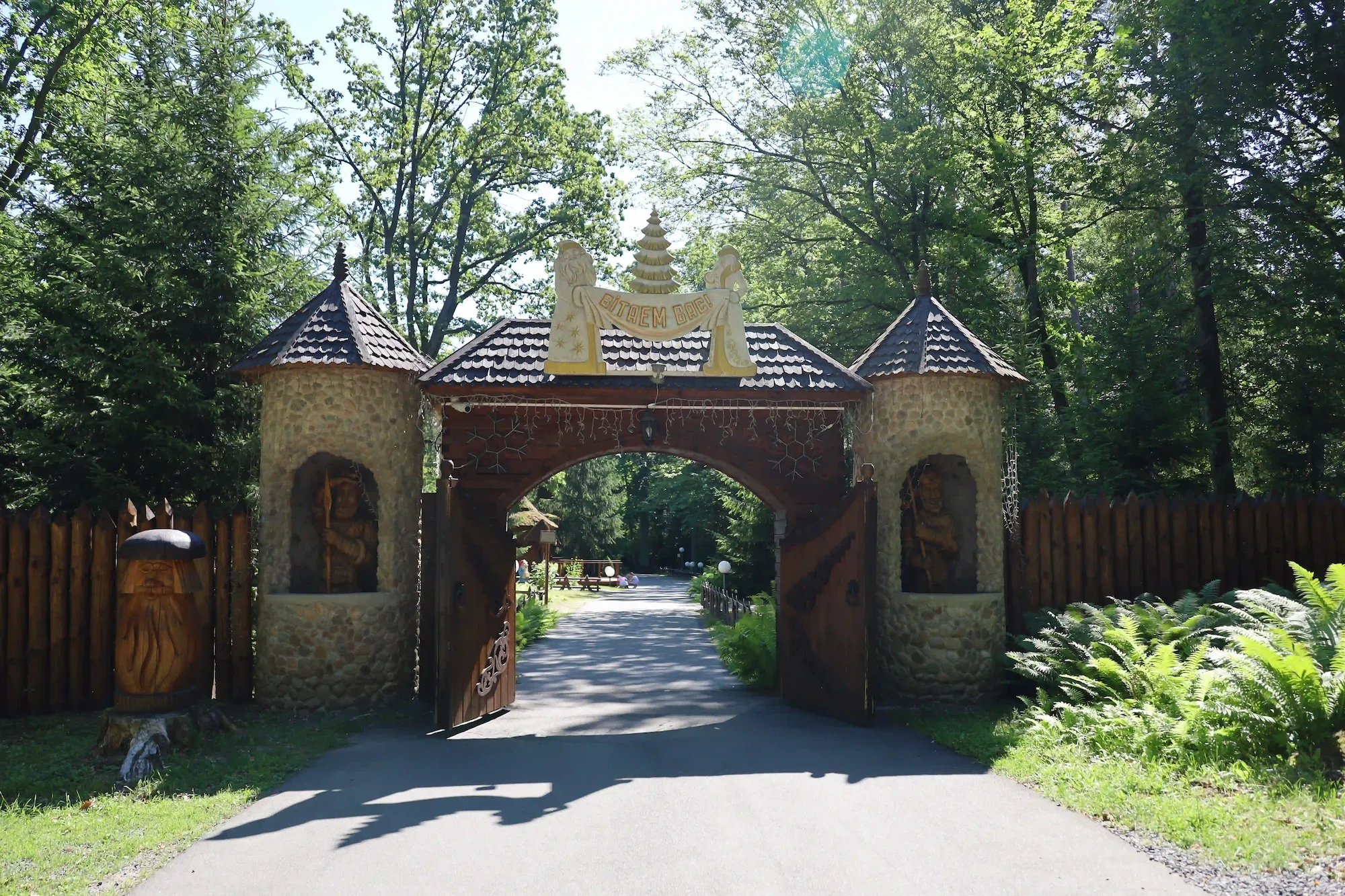
Santa Claus's Estate
The route is equipped with information boards
Gazebos
Shop
Santa Claus's Estate
The route is equipped with information boards
Additional information
 Navigation assistance along the route
Emergency assistance in case of breakdown of the rental bicycle
Bicycle rental
Navigation assistance along the route
Emergency assistance in case of breakdown of the rental bicycle
Bicycle rental
Log in to leave a review.