Bicycle route «Elensky Bor»
Belovezhskaya Pushcha National Park
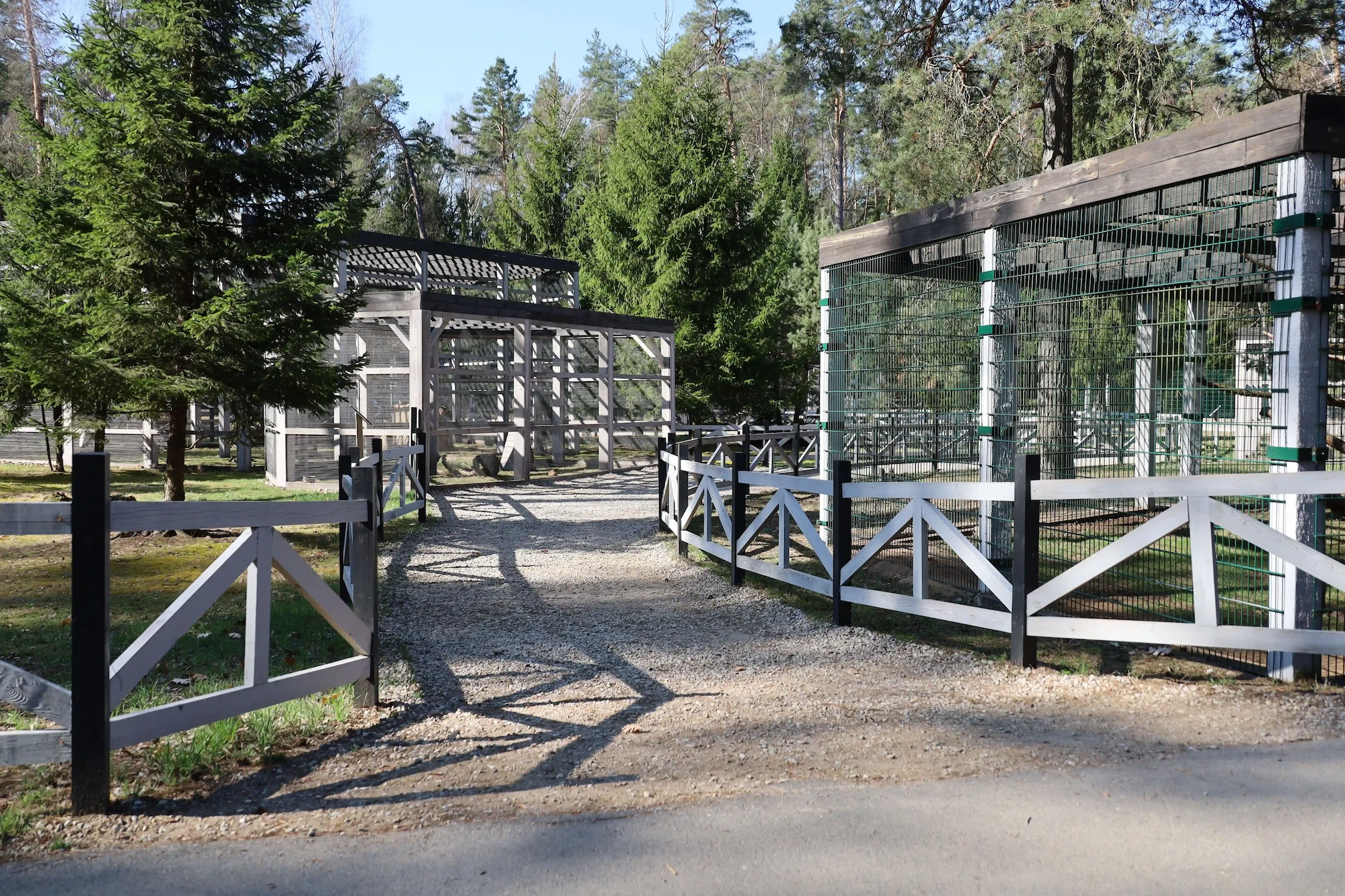
The route runs through the southern landscape zone of Belovezhskaya Pushcha National Park. It is 12.9 km long. It follows forest sand and dirt roads and clearings. The route’s complexity is rated as average for less-experienced hikers.
On the route, hikers will be able to explore the flora and fauna of the National Park and explore the meadows, forest and wetlands of the nature reserve.
1.Biotechnical fields. (52.579416, 23.808410)
Biotechnical fields are feeding areas for animals. Various agricultural crops (rapeseed, oats, corn, millet, etc.), which are popular food for many herbivores, are sown in biotechnical fields. Pastures and hayfields are also improved and grassed. Perennial grasses are grown in this area and animal feed is prepared for the winter.
2.Hunting road. (52.598223, 23.812218)
Forest roads in the forest have long been called “tribes.” On these roads, as well as in forest clearings for driven hunts, a special hunting infrastructure was created special shelters for shooters called “stands.” In the old days, stands served two main functions: they provided camouflage and a comfortable position (earlier, they even had rests for guns). Beaters, encircling the forest in a chain, forced the game to move in the direction of the stand, where hunters waited at “numbers” in the stand. Modern hunting enthusiasts have different weapons and equipment, but many of the techniques of the ancient hobby have not changed for centuries. Tribes and stands still exist today.
3.Oak Forest. (52.598275, 23.808956)
Centuries-old oak groves are the pride of Belovezhskaya Pushcha. These unique trees bear witness to centuries-old stories and underscore the importance of understanding the protected nature of this forest. In gratitude for their protection, the oaks provide humanity with essential oxygen, feed local wildlife with acorns, and provide shelter for some of them.
4.State Border. (52.598275, 23.778487)
The state border divides the transboundary forest into Belarusian and Polish parts. Several border outposts are located within our national park, protecting the peace and quiet of both countries.
5.Deadwood. (52.596602, 23.776040)
There is much controversy and debate surrounding the use of deadwood. One thing is undeniable: deadwood is closely linked to a dense food web of organisms.
Deadwood also creates unique ecological niches; for example, it creates a more humid area where moisture-loving organisms find comfortable living conditions. For every 100 square meters of natural forest, deadwood adds more than 60% additional surface area.
It is noteworthy that the number of moss species decreases as the wood decomposes, as does the number of lichens, while the number of fungi increases.
Deadwood is also important for vertebrates, even fish. Such wood is also important for snakes and reptiles as a hibernation site.
6.Temporary streams of an ancient forest. (52.595518, 23.774817)
Historically, Belovezhskaya Pushcha is a highly swampy area.
The total area of swamps is over 40,000 hectares, or more than 30% of the territory. Over the course of history, the wetlands of the Pushcha have been significantly developed by humans. Due to land development, groundwater levels in some areas of Belovezhskaya Pushcha have dropped by 50–150 cm.
However, not all areas are in a classic flooded state. Some wetlands are seasonal streams that are active in the spring, fall, and other periods, and dry up completely during the hot summer months. Despite this, even during droughts, they remain popular among local inhabitants. So the mud, which protects against mosquitoes and midges, attracts wild boar and deer, who, having wallowed to their heart’s content, rest peacefully under the shade of the foliage.
7.Birch grove. (52.588599, 23.769708)
Birch forests are small-leaved deciduous forests. Birch forests are the most wind-resistant and undemanding of soil fertility.
Being the most sun-loving tree species, birch is the first to colonize open spaces, allowing conifers to thrive under the canopy of its open crowns. Birch is one of the most revered trees among the Slavs. It is also a very convenient wood for carpentry. Birch bark is the first “notebook” and “box” for berries, “birch porridge” for fidgets, cosmetics for beauties, medicine and staffs for magicians, and magic wands.
According to mythology, birch trees that grew near lakes and extended their long branches down to the water were called mermaid trees. On Trinity, the holiday when the mermaids went out to play, they tied colorful ribbons and scraps of cloth onto a birch tree so that the mermaids could braid their hair with them.
8.Yelensky Bor. (52.585909, 23.772919)
Yelensky Bor historical site is located on the third line of “colonization” of the Belovezhskaya Pushcha and belongs to two hamlets of the same name that were previously located here. The hamlets also had the second names “Gritsuki” and “Matski” after the surnames of local residents. The hamlets’ main occupations were subsistence farming in the floodplain of the Lesnaya Pravaya River, protecting the Pushcha, monitoring the “entrances” to its territory for livestock grazing, and organizing the activities of local beekeepers.
9.«Plyanta» is an object of repeated swamping.( 52.579895, 23.775491)
The creation of this facility is connected to the development of the “park and management section” of the Belovezhskaya Pushcha State Forest Management Area (currently, the recreation park area). The project was implemented in 1965; additional fountains, monuments, and a perpetually blooming garden were planned for the area. However, by the time of the next forest management, the “park and management section” had been abolished.
In its current state, the facility consists of a canal system dammed in 2016 to restore the hydrological regime.
Most of the watercourses are seasonal. During winter thaws and early spring, meltwater fills the canals. During the following seasons, the water is retained and gradually drains through groundwater aquifers. This provides additional moisture to adjacent forest complexes.
10.Swamps and their vegetation. ( 52.578227, 23.776492)
Swamps are complex natural ecosystems that combine features of both lakes and dry land. Their characteristic features are the presence of peat and an abundance of water. Between 80 and 95% of the water is contained in the peat itself. The total area of unforested swamps in Belovezhskaya Pushcha accounts for more than 7% of the territory. Almost all large swamps are found only in its northeastern part.
Often, the swamps of the national park are devoid of tree vegetation; the remaining ones are covered with sparse pine and willow stands with downy birch.
Of the shrubs and undershrubs found in the swamps of the national park, the most well-known are highbush blueberries, cranberries and wild rosemary with its intoxicating aroma. Less noticeable, but common in the raised bogs, is the andromeda plant with its delicate pink bells. Among the herbs, cotton grass is characteristic, blooming early in the spring and by summer hanging its white, delicate fluffy tufts over the swamp, which are mistaken for flowers.
Phone: +375 33 399-19-32
E-mail: admin@npbp.by
Services and amenities
 Gazebos
Shop
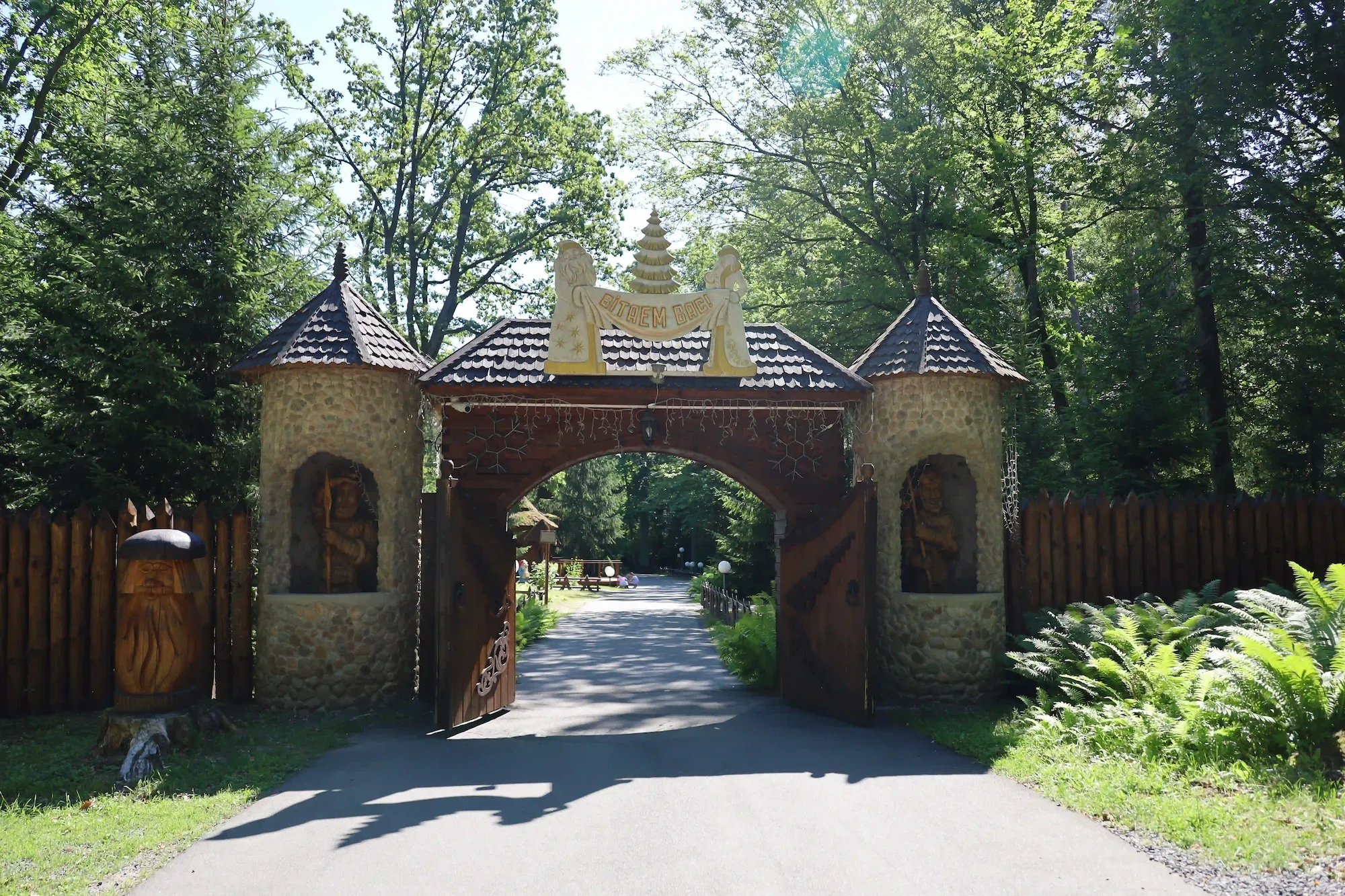
Santa Claus's Estate
The route is equipped with information boards
Gazebos
Shop
Santa Claus's Estate
The route is equipped with information boards
Additional information
 Navigation assistance along the route
Emergency assistance in case of breakdown of the rental bicycle
Bicycle rental
Navigation assistance along the route
Emergency assistance in case of breakdown of the rental bicycle
Bicycle rental
Log in to leave a review.